Tuesday, 31 July 2007

Top 100 Albums - #78: Aerial (2005)

Kate Bush finally makes an appearance on the chart with her most recent, comeback effort, Aerial, released after a 12-year hiatus from the music industry.From the release of her debut single 'Wuthering Heights' in 1978, Kate Bush had wowed and bemused audiences alike with her mystical appearance, idiosyncratic lyrics and eclectic sounds. But after the release of The Red Shoes (1993), Bush vanished from the music scene, refusing to tour, give interviews or appear in public for the press. She earned herself an unjustified reputation as a recluse, being compared to Greta Garbo and Miss Havisham¹, when in fact she was only trying to raise her children like an ordinary mother. After numerous press reports of new material, mental illness and weight gain over the years, she announced the release of her new double album, creating a wave of publicity and making it the most eagerly anticipated record of the year.

Which brings us to Aerial itself. Like Hounds Of Love (1985), this is really two albums - the first is subtitled 'A Sea Of Honey', the second 'A Sky Of Honey'. 'A Sea Of Honey' is opened by 'King Of The Mountain', a song about Elvis Presley, Citizen Kane and the excesses that come with being famous. The opening sets the mystical scene with some interesting rhythms before Bush comes in. Although it is immediately clear that her voice has not deteriorated (thankfully), she is at time a little hard to understand. Nevertheless, it doesn't appear to matter - either because you're just glad to hear her again, or more likely because this a great example of Bush's musical and arranging skills. It's a fine piece on its own - making it a good choice for a single - and a good opener.

Having eased you in, we now begin to see the weirder side of Bush, back with a vengeance. 'Pi' is again a textured piece musically, but considering the subject matter - reciting pi - this feels overproduced and rather self-indulgent. Had this been more minimalist, or darker, à la Radiohead, this would have been a great deal more compelling. 'Bertie' is a Renaissance ode to her young son, whom she gave birth to in 1998. Bush can get away with lines such as Here comes the sunshine/ Here comes this son of mine, which though they don't sound trashy or out of place are still not quite of the quality fans have yearned for. Otherwise this is a rather indifferent effort - it's not lazy, far from it, but it's also a rather hard listen for the casual explorer.

'Mrs. Bartalozzi' is more toned down, and features some beautiful piano at the beginning. And yet, this seems a little half-hearted from Bush. Although her delivery is as ethereally mysterious as always, she chooses to expound it on a series of subjects - in this case laundry - which don't really justify it, which could have easily been passed off by a lesser vocalist. In other words, as good as this song is, you would not have thought that this was a song Bush had written for herself, because it just doesn't justify her abilities.

Things pick up however with 'How To Be Invisible'. Again, the intro to the song serves as a hook while being wonderfully ornate and mysterious. Bush again lets the music do the talking while she serves up more lyrics which would take an expert to unravel. Although it is clear that this is to do with her retreat from the limelight, the rest is more ambitious - it is anyone's guess as to the meaning of lines like Is that the wind from the desert storm?/ Is that an autumn leaf falling?/ Or is that you walking home?. Nevertheless, this is a much more solid effort from Bush.

'Joanni' begins with a more industrial, space rock feel before a string section breaks the metallic awe of the drums. But while the 'background music' is very atmospheric, it is all in vain because Bush here sounds inane from the moment she opens her mouth. Not only are the lyrics rambling and incomprehensible, but the verses have even less structure than you would expect. 'A Coral Room', the final song on 'A Sea Of Honey', is a whole heap better, because things are stripped back to just a piano forcing Bush to focus. And it works. This is a beautiful number which slowly unwinds as you lie back and become absorbed by her relaxing tones.

'A Sky Of Honey' opens with the extraordinary 'Prelude'. Using pipes and some wondrous recordings of birdsong, this is the perfect combination of musique concrète with some sensitive piano and sparse vocals (spoken by an uncredited child, probably Bertie). Although this is very short, it segues into 'Prologue' which continues this emotive peak of creativity. This is a perfect track for midsummer, with Bush at her most ethereal when it comes to delivery. And the best part is, as with a lot of the album you don't need to pay attention obsessively to the lyrics, because, like Iona, they are part of a greater soundscape which blend and merge seamlessly with the music itself.

'An Architect's Dream' surprises you at first, as you hear the unexpected voice of Rolf Harris, who also plays didgeridoo on the album. Before long, some lovely percussion kicks in courtesy of maestro Bosco D'Oliveira. Accompanied by more wonderful strings, Bush glides along some more indecipherable syllables without a care since the production is so lush and the groove so soothing that the listener is unpertrubed. The same cannot really be said for 'The Painter's Link', for although this is musically superb, the presence of a male voice - Lol Creme's - ruins things, especially since he is an indie singer and has such deliberately cannot sing.

'Sunset' quickly pushes this flaw under the rug with a delivery and structure which recalls 'Wuthering Heights' in several places. The way she sings A sea-ee-ee of honey/ A sky-ey-ey of honey is really rather intriguing. The lyrics are beautiful and mystical, almost psychedelic in an innocent kind of way: For those who wrote the song of summer/ That blackbirds sing at dusk/ This is a song of colour sounds like a line right out of the late-1960s. The song concludes with a speeded-up section in which Bush suffers a little, but it still sounds very reasonable.

'Aerial Tal' is the shortest track on the album, clocking in at only 1:01. It features more wonderful birdsong, probably from a blackbird which inspired the cover - the photograph is not of islands reflected in water, but of a sound wave or voice pattern produced by a blackbird. The bad news is that Bush attempts to impersonate it over the top of the actual bird - and it sounds awful.

'Something In Between' is the best track on the album, because it combines the eclectic and syncopated rhythms of the earlier songs and the string and orchestral work of the later works in the perfect balance. Bush gives herself plenty of room, which means that lines like This is where the shadows come to play/ 'Twixt the day and night/ Dancing and skipping/ Along a chink of light are given the space necessary to make their impact complete. This is even more the case with the superlative chorus.

'Nocturn', clocking in at an epic 8:34, is, as the name suggests, slower and more subdued in tempo. We get the first sights or tastes of a song cycle which we weren't aware of before, in that this features vignettes of lyrics from previous songs. This is a wonderfully soothing song which chills you out so much that you will never want to move again, remaining in the same time and place for as long as possible. To be crueler, this is a good song to go to sleep too - but in a good way. The closer, the title track, begins with some wonderful string riffs faded in and out before Bush reaches a psychedelic peak. She then transmutes into a rock siren, as backed by aggressive hi-hat and electric guitar she screams and croons out her lyrics with brio. And soon, we are treated to more delightful birdsong, albeit overlaid with her rather creepy laughter.

For non-cultists, Aerial will prove a very difficult record to get into. It is even more difficult when your knowledge or experience of Kate does not extend much beyond her adventures into pop like 'Wuthering Heights' and 'Running Up That Hill'. For this resembles neither the creepy screeching on The Kick Inside nor the eclectic pop rock of Hounds Of Love. And yet this is not an album to be idly shoved to one side and allowed to gather dust after a single listen. At its peaks - and there are many - Bush's talents as a singer and composer are evident, and the symphonic quality of the record plays to her advantage, both as a reference to her literary inspirations (not just Brontë, mind), but also giving her an operatic quality. The main flaw with Aerial, though, is that it is way too long. It would have made more sense to release 'A Sky Of Honey', which is more consistent and conceptual, and then tweak the first album as a follow-up. The fact that she has chosen not to is still another thing that sets Bush apart as a maverick. It's where she belongs, and from the looks of things, it works very well for her.

3.75 out of 5

References
¹ Patrick Barkham, 'Guardian profile: Kate Bush', The Guardian, September 30 2005 - available at http://arts.guardian.co.uk/features/story/0,,1581815,00.html. Accessed on August 1 2007.

Monday, 30 July 2007

Top 100 Albums - #79: Ringleader Of The Tormentors (2006)

Morrissey's only effort to make the chart is his most recent release. Ringleader Of The Tormentors was designed to consolidate Morrissey's solo comeback after the success of You Are The Quarry (2004). Following the success of Vauxhall And I (1994), Morrissey had declared that he would never top it, being at the very peak of his powers and contemplating retirement.¹ Unfortunately for him, the next few years seemed to fulfill those badly chosen words. His next two albums, the proggish Southpaw Grammar (1995) and the Smiths-ish Maladjusted (1997) both received mixed-to-negative reviews. As Britpop swept across 1990s Britain, the likes of Blur and Oasis denounced Morrissey as a moaning has-been, and he limped off to Los Angeles into what seemed like retirement. In 2004, with Britpop dead and buried, he stormed back with You Are The Quarry, restoring his reputation as a doom-mongering wordsmith and setting things up nicely for a full-flung comeback.

Or so you'd think. Because listening to the opening track, 'I Will See You In Far-Off Places', does not fill you with much hope or make you believe that the hype is deserved. The pre-vocal section is too chaotic to add anything to the song, and Mozza's clunky delivery makes this an almost impossible listen. It's repetitive, formulaic and lyrically incredibly awkward, even by his standards. It is the same story for 'Dear God, Please Help Me'. The use of acoustic guitar and organ is a very interesting and wise choice, but again Mozza is the fly in the ointment. Lines likes There are explosive kegs/ Between my legs sound like a lyricist's cry for help, being so jerky and unsubtle as they are. It's not that Morrissey can't sing - it's just that his voice leaves no room for the casual listener.

The single 'You Have Killed Me' shares the same flaws, and makes things worse by becoming the most vacuous drivel he has produced in years. The verses are meaningless tat and the chorus is almost laughable, with lines like Yes, I walk around, somehow/ But you have killed me, you have killed me. Morrissey has squandered everything available - including a fair strings session provided by producer Tony Visconti - to produce a tacky, meandering pub-pop song - for this, he has every reason to be ashamed.

Thankfully, things improve a little with 'The Youngest Was The Most Loved'. Even that statement comes as a relief in itself. Opening with traffic noises, all fears of more drab 3-minute pop are quashed with this dark parable of a protected child who turns into a killer. With strong bass at the start, and a good ironic refrain - There is no such thing in life as normal - this is a much stronger piece which, at the very least, doesn't grate your nerves. And to do this with both a children's choir and pointless falsetto at the end is quite a coup.

'In The Future When All's Well' starts very boldly, as if to say that this form will continue. It doesn't. This is a return to the inane self-parodying pop of the first three tracks. This is too bright and repetitive to pass muster as a real Mozza masterpiece, to use the word extremely loosely. There are lyrical hooks, but they are of such a banal and stupefying nature that they dig into your side instead of earworming their way into your memory.

Finally, after all this torment, we come to 'The Father Who Must Be Killed'. This is a murder ballad of Nick Cave quality. It pulls no punches while, like all good murder ballads, making you side with the killer, in this case a child killing its stepfather. The lyrics are graphic to say the least:

So the step-child ran with the knife to his
Sleeping frame and slams it in his arms,
His legs his face his neck, and says:
"There's a law against me now."

Through listening to this enticing track, whetting your appetite for the second half, you can't help wishing the rest of the album had been more like this. At the very least, a lot of the features of this track could have been grafted onto the other tracks. But before you can speak your mind, the rain begins to fall as we enter 'Life Is A Pigsty'. The previous track may have been great, but this is fantastic. This, and this alone, is the great track on the album, the yardstick against which modern Mozza should be measured. The production is superb, the use of piano is sensitive and the rain completes the mood without seeming like an offcut from a forgotten prog record. Like the bass line, the message is simple yet brilliant - that modern life is shit, and there is no escape. Sure, it would be too hasty to compare this to something like 'Gloomy Sunday', but this is as close to utter despair that Morrissey has come since the days of Hatful Of Hollow (1984).

It is a great shame then that, having delivered two of his finest tracks in one go, Mozza goes and ruins things on 'I'll Never Be Anybody's Hero'. This is not quite is inane as some of the songs, but it still feels like he's treading water, extending choruses to string out a dead message and avoid producing only half an album. There are more laughable lyrics, like I am a ghost/ And as far as I know/ I haven't even died, which well make you scoff or else fain pity. It's the same story with 'On The Streets I Ran'. In it Morrissey claimed that he has Turned sickness into popular song - more terrible self-parody. You sense that the sessions musicians - especially Gary Day on bass - are straining to desperately bring out the best in the music, and yet they are losing the battle to Morrissey's mindless mediocrity.

The last truly fabulous song on the album is 'To Me You Are A Work Of Art'. As on 'Life Is A Pigsty', the production is rich and layered, and yet this is more upbeat, making it a double coup. The chorus is impressive enough, at least by contemporary standards:

To me you are
A work of art
And I would give you my heart
That's if I had one

There are some wonderful guitar and bass vibes coming on here on tops of the electronica washes which are reminiscent of 'Unhappy Birthday' on Strangeways Here We Come (1987). It was the continuation of this sound which made Morrissey's first solo record, Viva Hate (1988), so successful, and by revisiting it he achieves the same result. It's a greatly underrated song, at least in the context of the album.

The closing two songs are both better fare in general from Mozza. 'I Just Want To See The Boy Happy' features great guitar and drum combinations from Boz Boorer and Dan Chamberlain respectively. It's an urgent plea which Morrissey manages to pass of without seeming either cloyed or a victim of his own signature sound. The latter is more grandiose, as with an orchestra backing him Mozza launched into a number which is both self-promoting and self-deprecating at the same time. There is little tinkering made to the formula which Mozza has by now consolidated (and then satirised), but this is fair enough in quality for even the devoted listener to overlook this.

Ringleader Of The Tormentors will try the patience of many a listener. Whether you come to this a Smiths and Mozza fan to the point of mental illness, or discover this by accident, you will need to come with plenty of patience and perseverance if you want to reach the good stuff. This, it turns out, is the sort of album which you skip through after the initial listen, and in any case the good tracks are only good as occassional listeners. All of this would seem to undermine the argument for its inclusion on the chart. But there are some good points to it. Visconti's production is as flawless as ever, as you would expect from one of the best in the business. And while the lyrics are the weakness of this album in many places, musically this is a reasonable effort. But while that is enough to redeem itself enough to justify its positioning, Morrissey should take these criticisms - which have been made elsewhere - on board whenever he chooses to complete his comeback.

3.75 out of 5
References
¹ http://en.wikipedia.org/wiki/Vauxhall_and_I. Accessed on July 31 2007.

Sunday, 29 July 2007

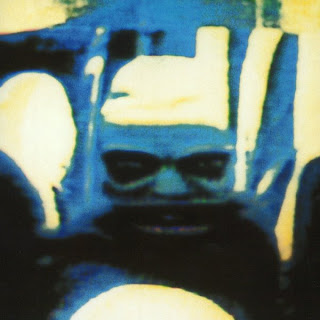
Top 100 Albums - #80: Peter Gabriel 4 (1982)

At number 80 is Peter Gabriel 4, the follow-up to its smash predecessor. Titled Security in the USA, it is a pivotal album in Gabriel's catalogue which showcases his fascination with world music and the beginnings of his commerical streak which culminated in So (1986).

After spending his first two solo albums fumbling around for a sound, Gabriel struck gold on Peter Gabriel 3 (1980). Unlike the light-hearted Peter Gabriel 1 (1977) and the subdued oddity Peter Gabriel 2 (1978), this had a darker, more atmospheric feel, encapsulating in Gabriel's claustrophobic lyrics and Phil Collins' thundery drumming. For the follow-up, Gabriel relocated to Ashcombe House in Bath to experiment with the latest electronic samplers and develop his new-found love of world music. After the commercial success of his last album, Gabriel was free to tour more elaborately and purchase more complicated equipment to add to the much-anticipated follow-up.

On these grounds, 'The Rhythm Of The Heat' is an ideal choice as the opening track, taking the darkly claustrophobic feel of Peter Gabriel 3 and adding the ticking clock, à la musique concrète - that is, the use of sounds recorded from the real ('concrete') world to create or compliment music, utilised brilliantly by Pink Floyd on 'Money'. Based on psychoanalyst Carl Jung's experiences of African drumming, it's a very atmospheric piece which draws you in, slowly but surely, before the darkness takes control. Gabriel's delivery is somewhere between a echoed whisper and a scream, as he lets the music do the talking. It's a very meticulous and intelligent piece, in which we get the first taste of world music on the record as the suspense dissolves into the wide pandemonium of the aforementioned drums.

'San Jacinto' moves from Africa to Asia, opening with an elegant instrumental backdrop faintly reminiscent of 'Flotsam And Jetsam' (see my review of Peter Gabriel 2). To make things even more eclectic, this is a song about Native Americans; the protagonist is an elderly man who despairs at seeing his native culture overwhelmed by the standardisation of white American settlers.. The lyrics smack of references to this in a very subtle way, even including extracts from what sounds like the Sioux language. Like a lot of Gabriel's later work, this is a heavily textured piece which explores religion and spirituality without being preachy, and for that reason the meaning isn't always clear. The refrain, San Jacinto/ I hold the line, is sung with great passion by Gabriel, perhaps alluding to why the song become a live favourite during the Secret World tour.

'I Have The Touch' is another in-your-face track, whose drums this time have a much more electronic feel. But David Lord's echoey production and the pace of the song give the feeling of this being played to a crowd of dancing fans. The lyrics are simple yet clever; lines like Any social occassion, it's "Hello, how do you do?/ All those introductions, I never miss my cue capture the themes of communication and human empathy. Though at time things sound a little synthetic - especially in the unnecessary bass before the middle-eight - this is a highly listenable song which doesn't lose anything in the process.

Hereoin in things become a little more difficult. 'The Family And The Fishing Net' is a song which compares the modern marriage ceremony to a voodoo ritual - hardly Gabriel's most anodyne subject matter. From the start it is relentless in its deceptive tempo, which is slower than 'I Have The Touch' but creates a sinister feel of something lurking behind the listener. The main criticism of this though is Gabriel's voice: not only is he often very off-putting in his choice of notes, he is also sometimes difficult to comprehend. Unlike on Peter Gabriel 2, this doesn't matter because the music is rich enough to support the song, but as we shall see this is a problem which afflicts this album a little too much.

It is often suggested that the track culled as a single is usually the worst on the album. 'Shock The Monkey' is a case in point. Rather than being about animal rights - as many suggested at the time - this is about jealousy, taking the idea that envy causes human beings to behave in primitive and instinct ways. This is a great idea, but the result is a number which is lyrically very flat and musically very irritating. The world influences are there, but they are squandered on what is essentially a pop song, a chance for Gabriel to showboat his vocal range while neglecting the best features of what could have been a brilliant song.

'Lay Your Hands On Me' marks the end of the typical mid-album dip. Gabriel's choice of themes remain diverse as he explores healing through trust, something he would expand on ten years later. This is a quieter and friend number, but the synthesised rhythms and deep keyboards keep up a brooding, sinister façade. The opening lines are both psychedelic and Biblical: Sat in the corner of the garden grill/ With the plastic flowers on the windowsill/ No more miracles, loaves and fishes/ Been so busy with the washing of the dishes. There are some subtle yet wonderful riffs in this piece on what sounds like a steel drum of some kind. True, this is a little too long, but not to the extent that it becomes boring, especially with the energetic guitar-drum ending.

Good as this track is, it is nothing compared to 'Wallflower'. Beginning with the combination of shimmering keyboards, high-pitched guitars and Uilleann pipes, this sounds ethereal and mystical even before Gabriel launches into the lyrics. Like 'Biko' on the previous album, this is a song about human rights and the treatment of prisoners, this time focussing on Latin America rather than South Africa. This is a wonderfully poetic number which showcases Gabriel's talents without being ostentatious. Like 'Family Snapshot', you get the impression that aspects of Gabriel's own life are in this piece. As if that wasn't enough, the chorus is pure beauty: You have gambled with your own life/ And you face the night alone/ While the builders of the cages/ Sleep with bullets, bars and stone/ They do not see your road to freedom/ That you build with flesh and bone. At the end of the song, Gabriel promises that I will do what I do, over and over - perhaps hinting at his prominent future involvement in human rights.

'Kiss Of Life' sends us out dancing. With its processed African drumming and Latin-style trumpets, it's a showcase for all things world, and a great track to dance to. Gabriel has rightly chosen to end on a bright note having spent the majority of the album expounding his views on the negative side of the modern world - albeit in a slightly lighter way that on Peter Gabriel 3. This is a splendid track which, while it can't possible match 'Wallflower', would have made a much better singler than 'Shock A Monkey'. With its infectious refrains and sensitive use of keyboards and guitar to balance out the world music, this is a wonderful closer.

Both through his records and his label Realworld, Gabriel has done more than most in the music industry in bringing world music to the fore. And this is the record to turn to if you're not convinced. Gabriel doesn't just take token samples from different continents and bung them on average Western songs so that they sell better. Instead he weaves the rhythms of the different genres into a rich tapestry, creating a very textured soundscape over which the social and political themes can be based. Sometimes things come unstuck in either the production or his choice of combinations - with both being the case on 'Shock The Monkey'. But in general this is a sterling effort from Gabriel which sets him apart both as a musical pioneer and a survivor of the punk era which had killed off so many of his contemporaries. If nothing else, this is a great way toi prove his abilities as a musician without either showboating, as he would do on Birdy (1984), or fumbling around, as he did in the late-1970s.

3.75 out of 5

Top 100 Albums - #81: OVO (2000)

Peter Gabriel's second appearance is his soundtrack to the Millennium Dome show, OVO. Along with his other soundtracks - Birdy (1984), Passion (1989) and Long Walk Home (2002) - this focusses on Gabriel the composer rather than the singer, and features many highly talented guests.Gabriel's output had slowed rapidly since his early days of post-Genesis burning the midnight oil. After the release of So (1986), six years passed until he delivered the follow-up, Us (1992), if we discount Passion, the soundtrack to Martin Scorsese's The Last Temptation Of Christ. After the release of Us and the end of the brilliant Secret World tour in 1994, Gabriel devoted his energies to his world music record label, Realworld, as well as beginning to write some of the songs which would appear on Up (2002). In 1997, he was approached to compose the main show for the Millennium Dome, to premiere on New Year's Eve, 1999. Unlike his previous film soundtracks, this was a live action piece and installation, which required greater ambition and outside help. The result is an album which attempts, through many different styles and voices, to chronicle the exploits of the human race over two millennia through three generations of a family.

'The Story Of OVO' is a rap-like number, designed to outline the story. It opens like a complex outtake from Passion, before Omi Hall and Neneh Cherry (of all people) interject. As we shall see throughout the course of the album, the story revolves around the characters of Theo (the agrarian father), Ion (the industrial and impetuous son) and his sister Sofia. While the point of the track is to set out the plot for those not used to the idea of a concept album (or rock opera), it is pointless to retell it without considering the individual songs. Although this is a rap song, this does not feel like Gabriel ageing without any grace. Indeed his vocal contributions are a perfect foil for the other vocals, which gel surprisingly well.

'Low Light' switches the emphasis from rap to celtic music, while keeping the world influence. This track begins with a long and perfectly constructed instrumental section, which acts to set the scene on a world of unravaged and harmonious beauty, like the one over which Theo would preside. Like a long of progressive music, this is song to take you places in a darkened room. The haunting lyrics of Irish vocalist Iarla Ó Lionáird don't harm the piece at all, and like a lot of world music lyrics the musical texture is so poised and intricate that you don't need to understand or translate the words to be emotionally moved by them.

'The Time Of The Turning' in the story marks the beginnings of an economic and environmental shift, as the old agricultural world of Theo, based around living in harmony with the earth, begins to pass away. Ritchie Havens' delivery is earthy, breaking and absolutely suited to this song, while Elizabeth Frazer puts in a good performances of the like that made Massive Attack's 'Teardrop' so poignant. Backed by what sounds like a mandolin and a subtle host of violins, this is another deeply atmospheric piece which deserves many plaudits.

The first sign of Gabriel biting off more than he can chew comes on the next track, 'The Man Who Loved The Earth/ The Hand That Sold Shadows'. The opening is a carbon copy of 'The Story Of OVO' with just the lyrics removed. As a result it sounds too much like a field full of grasshoppers and angry drummers to serve any purpose, adding little to the storyline. By the time the song shifts to the second part, we still don't get any more information about Theo: the piece is littered with industrial-sounding guitars and steel drums which feel completely out of place in a scenario thoroughly fit for folk or psychedelia.

'The Time Of The Turning (Reprise)/ The Weavers' Reel' restores focus and the sees the first appearance in the story properly of Beth, the mother figure who sees the future in the patterns that she weaves. The lyrics, delivered beautifully by Frazer, are of rock opera quality:

It's the time of the turning and the old world's falling
Nothing you can do can stop the next emerging
Time of the turning, and we better learn to say our goodbyes


The piece then takes on a more lively turn. An anxious acoustic gives way to an Irish reel and the feeling of flux and rapid change is conveyed perfectly in this lustred number, which finishes with some powerful and aggressive Dhol drumming to keep the world music influence and give the impression of a global change.

All these songs so far have been great, but they cannot top the next two songs. 'Father Son' sees the death of Theo as his world begins to fall. Ion, his stubborn and rebellious son, sits with him and struggle to come to terms with the distance between them. Gabriel sings this accompanies only by piano and a muffled Black Dyke Mills Band, and he sings with such heartfelt abandon that he might just as well be singing about his own father. It's an introspective masterpiece which not only achieves its function as a part of the story, but which stands alone as a damn fine song outside of the concept.

The other true masterpiece, for different reasons, is 'The Tower That Ate People'. Here all the serenity of green fields has been replaced by the menacing of iron and steel, as Ion transforms the Earth through machinery. He creates this mighty tower and builds machines to liberate the people of the Earth, but they end up becoming enslaved by them (hence the title). This has a darkly industrial feel, with wonderful guitar work and punchy drums. Gabriel's delivery is angry, fiery and potent enough to send shivers down your spine. This is a deliberately claustrophobic song, designed to force you in and leave no means of escape. Not only that, but lines like We're building up and up/ 'Til we can touch the sky and Man feed machine, machine feed man lyrically convey the modern ideas of progress and perfection that Gabriel was trying to convey.

So far, then, so very good. But here's the bad news. The next four tracks all fall short, in that they convey the storyline but don't stand well enough as songs in their own right. 'Revenge' smacks of anger, retribution and raw energy, depicting the rebellion of the disillusioned Sky People, led by Beth, against Ion's industrial dystopia. The trouble is, for all the wailing keyboards and attacking drumming, it's too short to develop into anything meaningful. The same can be said for 'White Ashes'. Again, the storyline holds up - we do form pictures in our minds of Ion's empire being incinerated, and him with it, as the female vocals conjure up images of flames. But the electric drums and screeches don't so much as add as subtract from this piece, which would have been much more pleasant and minimalist without them.

'Downside Up' should be better on all counts. It features great vocals from an in-form Paul Buchanan. It keeps the story moving, talking about Sofia's fated and forbidden love for Sky Boy which permanently unites the Earth People and Sky People before the great flood (no jokes about a certain song, please). It's a great song melodic with rolling guitars. And yet it is reduced to average nature by one critical error: giving Frazer the lead female vocal. While she was well suited to the quieter efforts, on this rockier piece she sounds prissy and weak, bringing down the energy of the whole piece. A better version is between Peter Gabriel and his daughter Melanie, the live version of which is included on Hit (2003).

'The Nest That Sailed The Sky' is the sending-off of OVO, the child of Sofia and Sky Boy into the unknown future. It's a beautiful piece which again conjures up images of an open sky with the future of the world hovering and sailing over the waters. But for all the beauty of the flutes and the keyboards, this is a little too long and repetitive, albeit in a very subtle and atmospheric way. By the time you've got halfway through this instrumental, you've got the message, and the remainder sounds like the kind of music you play mid-way through the credits on a film.

Thankfully, this is not the end. The closer, 'Make Tomorrow', is Gabriel's expression of hope for the century to come. Though it begins rather slowly, this swells with an atmospheric murmur into some wonderful guitar and double bass, before Buchanan comes in and sings at the top of his range with heavenly panache. Frazer returns to form with the female vocals, delivering her vocals with an ethereal grace. And Havens pops up at the end with a welcome interjection, singing a part to which Buchanah would not have been suited. Everything is here to showcase Gabriel's composing skills, and while this is not in the same league as something like 'Father Son', it's still extraordinary.

Like much of Peter Gabriel's later work, OVO was panned by AllMusicGuide.com. The supposedly all-knowing, comprehensive guide, claimed that: "OVO sounds labored, choppy, and pasted together... musically it isn't consistent enough to sustain the listener's interest."¹ Sadly for them, they were wrong. Very wrong. While Birdy and Passion both showcased his abilities as an instrumental composer (and rightly so), this is a concept album or rock opera passed off as a soundtrack. And like a proper concept album or rock opera, there are themes and narratives which are neither convoluted nor lost in the music. Sure, this may not be on the same scale of The Lamb Lies Down On Broadway (1974), but it is just as ambitious, with great vocals which gel rather than jar with the music. There are flaws - it's too long, has a lot of filler in it and not all of the attempts to synthesise different genres pay off. But as an album in its own right and a document of the Millennium optimism which vanished 18 months later, OVO is a great record that will stand the test of time.

3.75 out of 5
References
¹ Thom Jurek, 'OVO: Millennium Show', http://www.allmusicguide.com/cg/amg.dll?p=amg&token=&sql=10:fnfexqukldhe. Accessed on July 30 2007.

Thursday, 26 July 2007

Top 100 Albums - #82: How To Dismantle An Atomic Bomb (2004)

U2's most recent offering is their third of five appearances on the chart. Regarded as a continuation of the themes and attitude on All That You Can't Leave Behind (2000), it set the tone both for the highly successful Vertigo tour (2005-06) and Bono's strong presence in the Make Poverty History campaign.


The late-1990s had been a difficult time for U2, with their previous album Pop (1997) getting indifferent reviews. Some questioned whether, with the rise of a new generation of rock bands led by the likes of Green Day and Sum 41, U2 had a place in the modern music industry. But the success of All That You Can't Leave Behind had reinvigorated U2, leading Bono to declare quite immodestly: "[We're] reapplying for the job. What job? The best band in the world job".¹ Following the end of the successful Elevation tour in 2001, the band spent the next three years releasing a 90s hits compilation - The Best of 1990-2000 (2002) - and the EPs 7 (2002) and Exclusive (2003).

The album opens up with 'Vertigo'. With its strangely plucked guitars and Spanish in the opening, it's a signature of the new sound. With 'Captain' Bono, at the helm, this is a very worthy effort which combines Clayton's stylish bass lines with The Edge's trademark high-pitched distorted guitar. Over power chords and shredding a-plenty, Bono delivers some of their strongest lyrics in years, for instance: The night is full of holes/ As bullets rip the sky/ Of ink with gold/ They twinkle as the/ Boys play rock and roll/ They know they can't dance/ At least they know... There is a hint of self-deprecating in both these lyrics and the song in general; it's as if U2 are making out that they are settling into their image and can live with their flaws.

'Miracle Drug' takes things right down at the start. Right from th beginning you sense that this is an attempt to match something along the lines of 'With Or Without Out'. On the down side, it features one of the worst lyrics on the album - Freedom has a scent/ Like the top of a newborn baby's head (sure it does, Bono). But while this can't even come close to that Joshua Tree masterpiece, it's a very good effort and a worthwhile equivalent for those who don't appreciate U2's 1980s sound, which admittedly can be a little rough.

This down-rock tone continues and improves on the next track. 'Sometimes You Can't Make It On Your Own' is Bono's tribute to his father, Bob Hewson, who passed away with cancer in 2001. Despite the cumbersome title, this is a brilliant effort. Bono is at his heartfelt, introspective best, and the lyrics could not be more genuine. He and his father did not always see eye to eye and they chronicle this, as you would expect. Musically, this is also a strong effort, notable for The Edge on backing vocals and sensitive playing from Mullen - although, to make one criticism, even at this stage he has been rather quiet on this album.

The first song on the album to underwhelm is 'Love And Peace Or Else'. Just looking at the title it's clear that Bono is switching into preacher mode. Despite its rather atmospheric opening, the song is relatively hollow and has the feeling of a rehash. Valid though the message is, it's one which Bono has said many times before in much better ways, and when he's this direct it rapidly becomes tiresome. To make a further criticism, Bon is allowed too much room for manoeuvre in relation to the rest of the band. As I said of October, a U2 with a flailing, unrestrained Bono is usually a U2 to avoid.

But before long, we ditch such criticism as we come to 'City Of Blinding Lights'. As on 'Vertigo', the signatures are all there - The Edge excels on his echoey guitar, Clayton is brooding on the bass and there is good stuff coming from Mullen. But the track is lifted and its sensitivity increased by the inclusion of piano, something which made October a lot more listenable. It doesn't work to have it on every U2 song, but here it's exactly what is needed to turn this from better-than-average rock song into a concert favourite. The song sees Bono at his spiritual apogee as he sings about heaven and beauty in a way which no other 40-year-old rockstar can carry off. It's a splendid, rousing song which showcases the absolute best in a band still at the top of their game.

Bono manages, having orchestrated such a triumph, to drop the ball on the next two songs. 'All Because Of You' may be a much more clever effort as far as the lyrics are concerned, but as far as the music is concerned, it's heavily clichéd. The Edge is relying on power chords to keep Bono in check, and while on this count he succeeds, he does so at the expense of whatever power the song possessed (as an inside, this frequently happened in The Who but with the vocals undermining the guitar - check out The Who By Numbers (1975) if you don't believe me). 'A Man And A Woman' sounds too much like 'Wild Honey', one of the lesser tracks on All That You Can't Leave Behind. To come straight to the heart of its faults, it's a dull way for Bono to show off his vocal range and play out with the mixing desk like a no-good Lindsey Buckingham.

'Crumbs From Your Table' drags things back temporarily from the land of boredom and self-parody. Rather than linger in sweet musings about relationships, Bono cuts to the spritual and Biblical chase with this song about Jesus. Though he does slip in the odd political hint - Where you live should not decide/ Whether you live or whether you die - this is a toned-down, straight-spirutual U2 which manages, because of this to gel together a very reasonable number. As is 'One Step Closer', for that matter. The sleeve credits Noel Gallagher for his help on this, and it shows in the restrained yet beautiful guitar work, as if Gallagher had broken all The Edge's fingers and then taught him to play again from scratch. The production is also very beautiful, with equal space given to all the players - imagine the surprise then, when it turned out that Steve Lillywhite was behind it. It seems the guy who cocked up October has got better with age.

It's just a shame that this creative coup doesn't last. 'Original Of The Species' was panned by MTV, and rightly so. It features that most clichéd of features on a rock track - a full violin section. A word to the wise, Bono - orchestral arrangements belong in classical music, progressive rock and rubbish ballads, not in stadium rock. Lines like I'll give you anything you want/ Except the thing that you aren't are difficult to comprehend and Bono's voice in grating and annoying on this, the track you are most likely to skip over on this shaky album.

'Yahweh' is the only time on the album when we find a track to match the brilliance of 'City Of Blinding Lights'. The reason is clear before you've even heard the first chord. Bono has once again disposed, more or less, of the politicking and the emotional diarrhoea and gone for the straightforward song about his Maker. Sure, he does slip in the odd reference, as before, but when vocally he has never sounded better you are willing to forgive or overlook it. Lillywhite has struck gold here by restraining both Bono and Mullen while The Edge strums away in passion.

The closer, 'Fast Cars', has a Spanish guitar feel to it. This doesn't harm it necessarily, but overall this is a lazy effort, and while 'Yahweh' would not have been a good closer, that hardly makes this a better choice. Sure, Clayton is given plenty of room - but to do what? There is some cheesy echo on Bono's vocals which make them sound even more off-putting. In general it's a bad way to end the album - a very bad way indeed.

How To Dismantle An Atomic Bomb is not U2's best album by any criterion. There are many unhelpful flaws. Just like David Bowie, U2 here have entered into and consolidated a 'neo-classical' sound, taking the best bits from their back catalogue and writing new songs around their styles and themes. The difference is that Bowie can do it without slipping into self-parody, which is the track which this fall into on a number of isolated occassions. That said, on a number of occassions, the finest moments gel together into a number of good and great songs. As a general guide, the best songs are those on which Bono forsakes his role as the political saviour of the world, and focusses on his relationship with God. It's a good addition to their catalogue and a sign of consistency which often deserts band once they pass a certain age. Nevertheless, perhaps U2 are wise to change direction at this stage, since following this up with more of the same would probably be a foolish waste of money. All signs point to the new album being a success, but it must be precise and well-approached - even after 31 years in the business, U2 still have something to prove.

References
¹
Josh Tyrangiel, 'Bono's Mission', Time, February 23 2002 - available at http://www.time.com/time/arts/article/0,8599,212605,00.html. Accessed on July 29 2007.

3.75 out of 5

Top 100 Albums - #83: Heavy Weather (1977)

At number 83 is the only entry from jazz fusion pioneers Weather Report, with the album which is most consistently rated their masterpiece. Like many of the 1970s supergroups, Weather Report had already gone through their fair share of lineup permutations by the time Heavy Weather came out. The band had gradually evolved since its creation in 1971, abandoning the heavy emphasis on improvisation that had marked their initial efforts by the time of their third album, Sweetnighter (1973). After this the band moved through funk - on their breakthrough Mysterious Traveller (1974) - on to incorporating synthesisers on the follow-up Tale Spinnin' (1975), and then rock with Black Market (1976). With keyboardist Joe Zawinul and sax player Wayne Shorter the only core members, the band's line-up, particularly on the drums, constantly changed. Black Market was the first Weather Report album for bassist Jaco Pastorius; his addition would prove all the difference.

We begin with 'Birdland'. What more can be said about this legendary track? This song, about a jazz club in New York, became a jazz standard for the likes of Buddy Rich and orchestras the world over, and achieved the kind of commercial success in America matched only by the mighty Herbie Hancock. And it's easy to see why. Zawinal's genius is there from the very start, with the simple yet disticntive seven-note opening. Pastorius is loud, vibrant and highly entertaining, and the jazz drumming from Alex Acuna is precise, simplistic and subtle. Everything about this track makes it a classic, from the panache of the individual instruments to the ease and skill with which they all slot together. It's an unadulterated masterpiece.

And from one masterpiece to another. 'A Remark You Made' is more understated, quieter and not half at catchy - but, since this is jazz, that is not an issue. Whereas on 'Birdland' relied on Zawinul and Pastorius to set things off, this is from the outset Wayne Shorter's song. He plays the saxophone with unrivalled precision and passion. And all the time the rhythm section is relaxed and equally accurate - Acuna plays with an acquired gentleness and sensitivity, and Zawinul switches from the rapid chords of 'Birdland' to the slow building harmonies on here. Pastorius plays beautiful, and the whole thing has a fantastic feel to it.

On 'Teen Town', things start to rock up a bit. Pastorius was described as "the Greatest Bass Player in the World"¹ by this point - though this title was entirely self-proclaimed, he wasn't wrong. Even fans of John Entwistle are likely to sit up and take notice. Backed only by an easily executed hi-hat and snare combination, 'Jaco' runs riot, feeding Shorter and Acuna invariably and pleasantly complex phrases on the bass which become much greater than the some of their parts. At only 2:51 this hardly qualifies as an epic WR song, but it is living (and hearing) proof of the talents of the ensemble.

'Harlequin', at least to start with, shifts the focus back to Zawinul. This time on piano, he rambles and swings around the keys like a very composed lunatic, staving on Pastorius' resonating bass work in another good piece. This, however, does not have the same focus or clarity of purpose that the previous tracks had. Although Shorter's skills as a composer are not in doubt, this ends up being a little too disorganised even for jazz. Certainly Acuna's drums towards the end become way too heavy on the cymbals, so that we can make out very little else.

The bottom really plummets out through on 'Rumba Mama'. A live track, supposedly, it could almost be considered a world music track. The first half is characterised by loud shouting from Manolo Badrena in a language that this difficult to discern, intersperced only by odd and awkward-sounding drumming from Acuna. The drumming aspect continues as the shouting decreases, and like John Bonham playing samba, it's too chaotic and overcooked to work, putting a damper on the whole project.

Thankfully, the slump doesn't last and 'Palladium' fights, literally, to restore the albums fortunes. And it does a pretty good job, since all the ingredients are here - Pastorius alive and loud on bass, Shorter on form on the sax, some more restrained and thoughful percussion from Acuna. Zawinul completes the picture with some delightful and thoughtful melodies in the higher registers, completing any 'comeback' with unrepentant ease.

'Birdland' and 'A Remark You Made' both set the benchmark very high, but on 'The Juggler' Zawinul almost surpasses both to create what could be regarded as the epitome of jazz fusion - though, considering the success of 'Birdland', maybe that's a little too strong. This is a more minimalist piece, with what seems like mixed time signatures, relying on Acuna to deliver - and he does, intelligently. But this is predominantely a Zawinul vehicle - his repeating keyboard riff - first heard at about 1:16, is absolutely to die for. All the performers are at the top of their game, and the result is brilliance.

'Havona' is the album's closer, and tragically it doesn't quite live up to the very high expectations set by the previous tracks. On this occassion, the keyboards are too electro and in-your-face for it to constitute a proper jazz song - an ambitious early-80s soul number, perhaps. Shorter and Pastorius do their utmost to resurrect this song, but on this rambling, bloated occassion they act and play in vain.

Weather Report's catalogue is a rather uneven one, if investigated carefully. All four albums from Mysterious Traveller to Heavy Weather won the prestigious Album of the Year rating by jazz magazine Downbeat. However, on closer inspection a lot of this earlier output is decidely hit-and-miss, as if the band were searching for a sound. This seems even closer to the truth which we look past 1977; their follow-up, Mr. Gone (1978) was panned by Downbeat, in what became the jazz equivalent of Rolling Stone's famous review of Bob Dylan's Self-Portrait (1970) - which began with the words, "What is this shit?". Taken historically, then, it would appear that Heavy Weather is the only time when Weather Report, or at least this incarnation, hit the mark. Not only that, it set the tone for jazz just as Steely Dan had done with Pretzel Logic (1974). Heavy Weather is by no means a perfect album - but it is a very important achievement.

3.75 out of 5
References

Wednesday, 25 July 2007

Top 100 Albums - #84: Franz Ferdinand (2004)

The first indie rock record on our chart is the debut album from Scottish band Franz Ferdinand, who set the standard for 21st-century indie pop-rock which all subsequent indie bands have sought to emulate.

The four-piece comprised of Alex Kapranos, Nick McCarthy, Bob Hardy and Paul Thompson, formed in 2001, when Kapranos and Hardy began playing together in Glasgow. McCarthy joined after meeting the two at a party. A guitarist and classically trained pianist, McCarthy originally wanted to try out on the drums, helped on by the fact that Thompson, ex-drummer with 1990s indie band Yummy Fur, wanted to try out guitar. But their positions soon swapped and the band began gigging. In 2003 they were spotted by Domino Records, who signed them and released a debut EP, Darts Of Pleasure.

'Jacqueline' gives the first indication of what sets both the band and the album apart. Unlike other indie bands - from the pleasantly aggressive Hard-Fi to the disgracefully shouty Cribs - Franz Ferdinand has a witty and intellectual feel to its lyrics. This is obvious even with the opening lines:

Jacqueline was seventeen, working on a desk when I-
vor peered above his spectacle
Forgot that he had wrecked a girl

You would not expect such poetry from a band so commercial and easy on the ears - as Kapranos admitted in 2007, "It’s always pop. Franz Ferdinand has always been pop."¹ After a very gentle and melodic opening, the bass guitar and drums kicks in and then McCarthy and Kapranos let rip with a series of razor sharp chords. What had been a mild-mannered folkish number with ulterior motives becomes a 21st-century stadium rocker. Lines like It's always better on holiday/ So much better on holiday/ That's why we only work when/ We need the money are both a direct appeal to their teenage audience and a summary of this generation's attitude.

'Tell Her Tonight' is more awkward and standard fare. With its repetitive verse structure and humdrum 60s chorus, it doesn't invoke the same emotional response. In what could be loosely called the middle-eight, Kapranos sounds so Teutonic and nasal that it becomes off-putting. McCarthy's chords are short, sharp and sub-standard when we consider the skill demonstrated on 'Jacqueline'.

We now come to 'Take Me Out'. This is not only the best track, it is an anthem for the 21st century. The chord progressions are sharper, the lyrics more memorable and the change in tempo and time signature at about 0:53 is on a sublime level only touched by the likes of 'Money'. The remainder of the song is breathtaking, toe-tapping and infectiously catchy. You will find it very hard not to stomp your feet, bang your head or air guitar to this superbly constructed song. While McCarthy works wonders with his strumming, Thompson's off-beat strokes add a wonderfully avant-garde touch. He is a very underrated drummer; though his skills are better showcased on You Can Have It So Much Better (2005), the signs are already there.

'The Dark Of The Matinée' manages to pretty much sustain this quality, again incorporating a well-executed tempo change. This is a love song which takes a welcome snipe at the vacuous pop and even more vacuous 'celebrities' emerging from the reality TV machine. The middle section is especially caustic:

So I'm on BBC2 now
Telling Terry Wogan how I made it and
What I made is unclear now
But his deference is, and his laugter is

With another infection chorus and good bass work - which is so often overlooked on indie records - this was another Top 10 hit simply because it is so well put together and sustains both musical prowess and contemporary relevance.

'Auf Asche' is the first truly strange track on the record. As shown by their videos, Franz Ferdinand are fascinated by 1920s avant-garde, and this is the first time this takes centre stage. There are hints in the spacious piano of an Eno soundscape - indeed, if Kapranos were any less distinctive, this may have been confused for a Bowie outtake from the Berlin era. There are no pop hooks either, but this is a cleverer and more complex song, so this doesn't really apply. With themes of broken love and isolation, and Christian references towards the end, this is a very interesting piece which would be an interesting thread to develop on later albums.

Having set an ever more ambitious and progressive tone, the band lose focus on both 'Cheating On You' and 'This Fire'. Both could be unfairly described as sell-outs - they are entirely built around catchy and repeating riffs - i.e. hooks - and the lyrics are relatively trite. 'Cheating On You' goes nowhere; you get the point of the song by the end of the first verse, or the first chorus if you're slower or more tolerant. 'This Fire' tries harder, with a good combination of Thompson's cymbals and McCarthy's squeaky riffs, but soon this collapses into their attempts at being lite-Muse. This doesn't get off the ground and they spend the remaining minutes wasting our time going around in circles, unsure of when is the time to stop.

'Darts Of Pleasure' manages to synthesise, at least partially, the conflicting media of aggressive, outspoken indie rock and quieter, avant-garde ostention. How? Largely through Kapranos' delivery and Thompson's drumming, both of which are highly intelligent. The song sounds like someone has taken 'Auf Asche' and 'Take Me Out', copied the best parts and blended them perfectly together. And, incidentally, the German at the end is one of the first incidencies in British music where using a foreign language for part of a song actually works.

'Michael' is pure guitar pop, coming from a band who could be loosely described as 'Blur with enthusiasm', or more accurately, 'Better than Blur'. The song is about a friend of the band who got drunk and started dancing effeminately at a party. Kapranos may not be Morrissey, but he succeed admirably in conveying the homoerotic impulse of the song in his lyrics and his delivery. The band sound confident, rocky and full of energy. There are some lovely harmonies reminiscent of The Beatles from McCarthy, who does himself resemble a young Sir Paul.

'Come On Home' is another well-crafted song with an American feel to it. Indeed you could be forgiven for turning down the volume prematurely for assuming that this was a country ballad purely by the sound of Kapranos' guitar. Hardy underscores him very well in the verses, while Thompson keeps things going well and McCarthy staves off country comparisons by some simple yet splendid synthesiser work - another avenue to pursue on future albums, should they so choose.

The album would be very good if 'Come On Home' had been the closer. But, unfortunately as it turns out, the band have one more offering. '40'' is too loose to pass off properly. Kapranos is trying to be clever with his lyrics - perhaps too clever, as after the initial few impressive lines it degenerates first into a 60s 'la la la' filler, then an organised studio jam with little sense of direction. What a shame.

Universally praised when it came out, Franz Ferdinand clearly deserves a lot of the praise it was given. The production is excellent, bringing out the four instruments as a collective unit, instead of four opposing war machines. The songs, with a few exceptions, are good not just because they are catchy, but because they are intelligent, arty and have a subtle wittiness that you don't see in many 21st century bands. It is also very bold for introducing part-way through into the mix a series of instruments and influences which could prove successful on later efforts. Above all, the real significance of Franz Ferdinand is an historical one; in years to come it will be the record which relaunced the indie quest for the charts long after Oasis had passed their self-by date. Though a little rough around the edges, it is a worthy addition to any record collection.

3.73 out of 5

References
¹ http://en.wikipedia.org/wiki/Franz_Ferdinand_(band). Accessed on July 26 2007.